Dedicated to the real Nicole Minet!


Marseille learned fear early in 1943. It clung to the docks, slipped into cafés, and followed Nicole Minet wherever she went. She was nineteen and already skilled at walking quickly without running, at hiding folded messages inside her missal.


Her father dined with Vichy officials and spoke of safety.


Nicole spoke of France.


Henri Laurent spoke of nothing. Orphaned young, the son of no one, he learned that silence could be a shield. He joined the Resistance the night the Germans took his childhood friend—a Jewish boy who once shared apples and laughter. Henri did not call it justice. He called it revenge.


They met at the university before the war devoured youth and certainty. Philosophy lectures, cold bread, whispered prayers in back pews. Love came quietly, then completely.


On Christmas Eve, 1943, they were arrested.


Nicole remembered Henri shouting her name, remembered the sound of his body hitting stone. Her father came once—pale, helpless, careful. He did not save her. She was sentenced to deportation.


Henri was sent to Auschwitz. Nicole to Bergen-Belsen.


She survived on prayer and memory. Henri’s name became a rosary bead, worn smooth by repetition. After the war, the Red Cross lists came. Henri Laurent was listed among the dead.


Nicole wept until grief hardened into resolve. France was a landscape of ghosts. She sailed to America with other survivors who needed distance to survive. She married a good man. A gentle man. She bore two children and learned gratitude. Still, every Christmas Eve, she lit a candle for Henri.


“I remember you,” she would whisper. “God remembers you.”


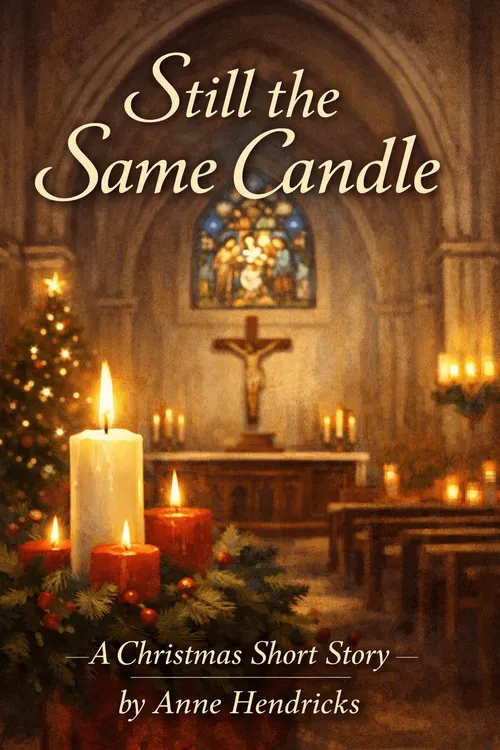
After forty years of marriage, her husband died peacefully. That Christmas Eve, Nicole entered her parish church alone. The sanctuary glowed softly. She lit her candle and prayed longer than usual.


“For his soul,” she said. “And for mine.”


At the holy water font, an elderly man knelt nearby. As she crossed herself, she smiled politely. “Merry Christmas.”


“Joyeux Noël,” he replied.


Her hand stilled.


She turned. “You sound like someone I once knew.”


The man studied her face, then slowly rolled up his sleeve. Faded blue numbers marked his wrist.


“Henri,” she whispered. “Henri Laurent.”


He rose unsteadily. “Nicole.”


She clutched him and wept. He held her, murmuring softly:


" Je suis ici. Je suis vivant. Je vais bien."


She pulled back. “They said you died.”


“They said the same of you,” he replied. “I married. She was good to me. We had sons. She died last year.” He hesitated, smiling faintly. “My granddaughter found your name. I knew I had to come. At Christmas.”


He kissed her gently, reverently, as though time itself had bent to mercy. Together they knelt.


“Merci,” Henri whispered.


“For everything,” Nicole said.


The candle burned steadily. The war was long over. Love, it seemed, was not.